Driving in Madeira in a rental car
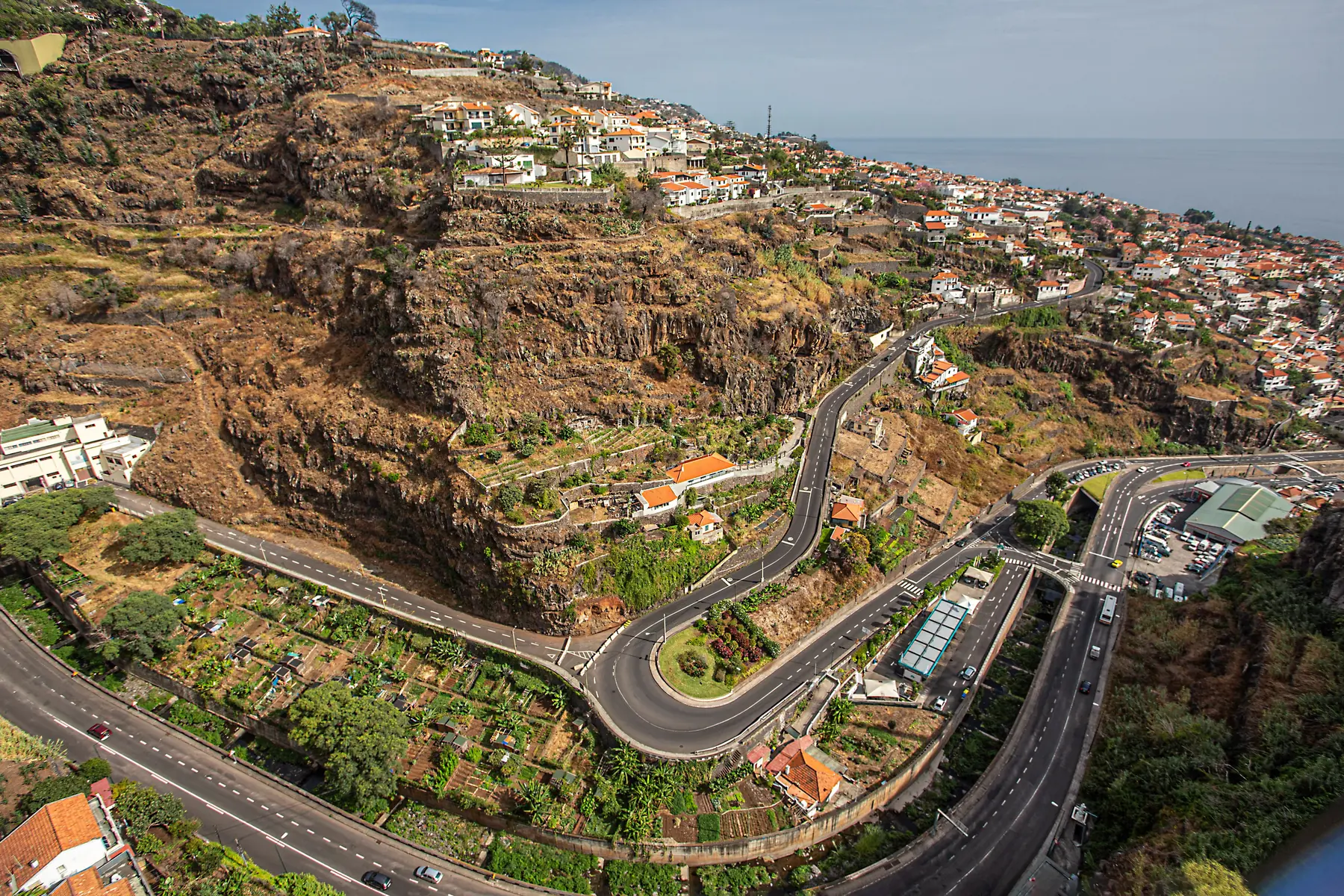
Driving in Madeira mixes the VR1 expressway along the south coast, with long bridges and tunnels, the via expresso roads, about half their length in tunnels, the VE2 among them on the north coast, and older regional roads that wind, climb and narrow. Portugal's traffic law applies to anyone driving a rental car on Madeira, and the island adds a speed sign of its own for dry weather.
Portugal drives on the right. For a car, the general limits are 50 km/h in towns, 90 km/h on ordinary roads, 100 km/h on roads reserved for cars and motorcycles, and 120 km/h on motorways; signs set lower limits in many places, and coexistence zones in towns are 20 km/h. The blood alcohol limit is 0.5 g/l, and 0.2 g/l for a driver in the first three years of a licence.
Madeira adds a sign of its own: on signed stretches of the VR1 (via rápida), a posted limit of up to 80 km/h may be driven at 90 km/h when the road is dry; in rain or on a wet road the posted limit stands.
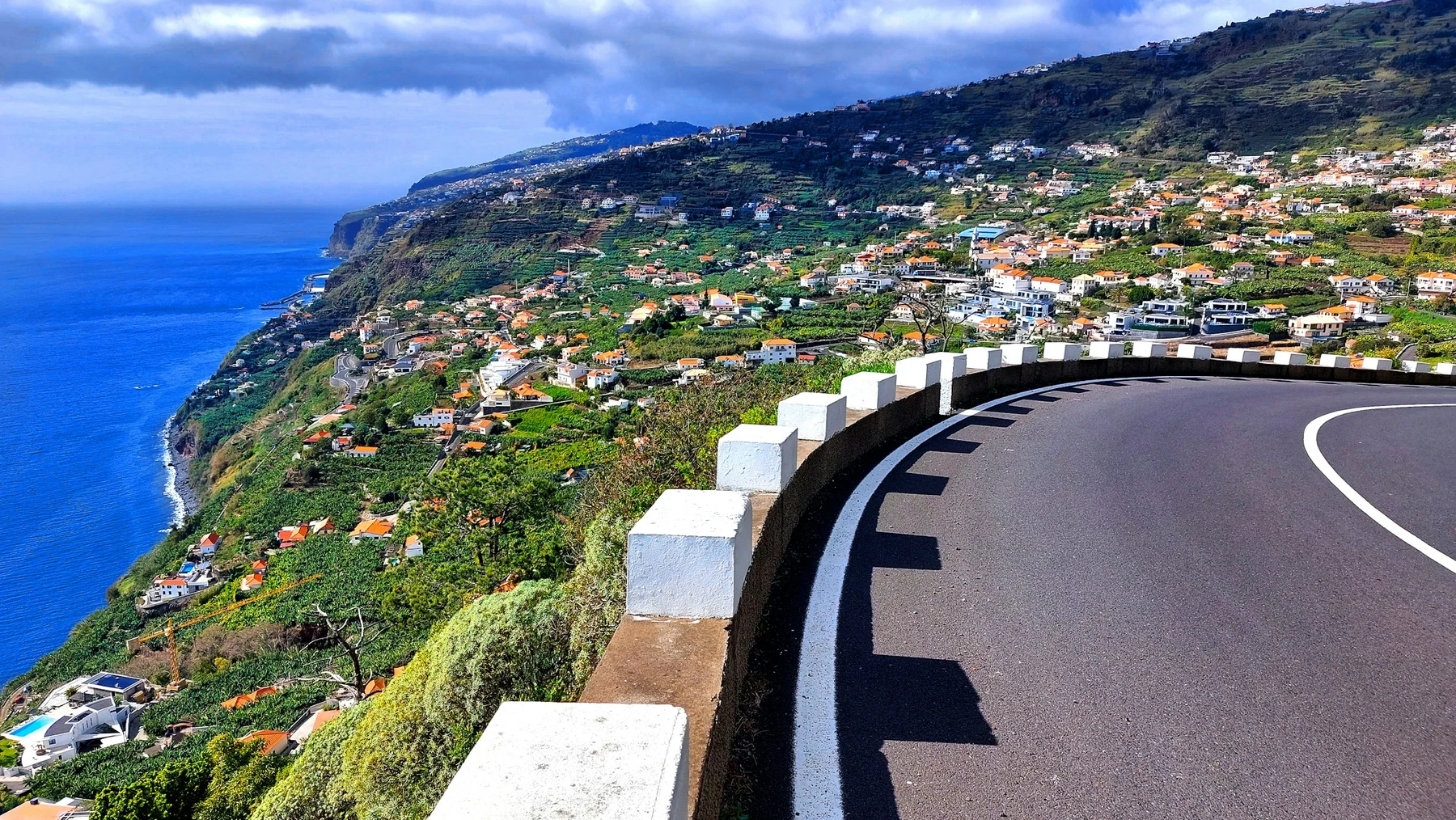
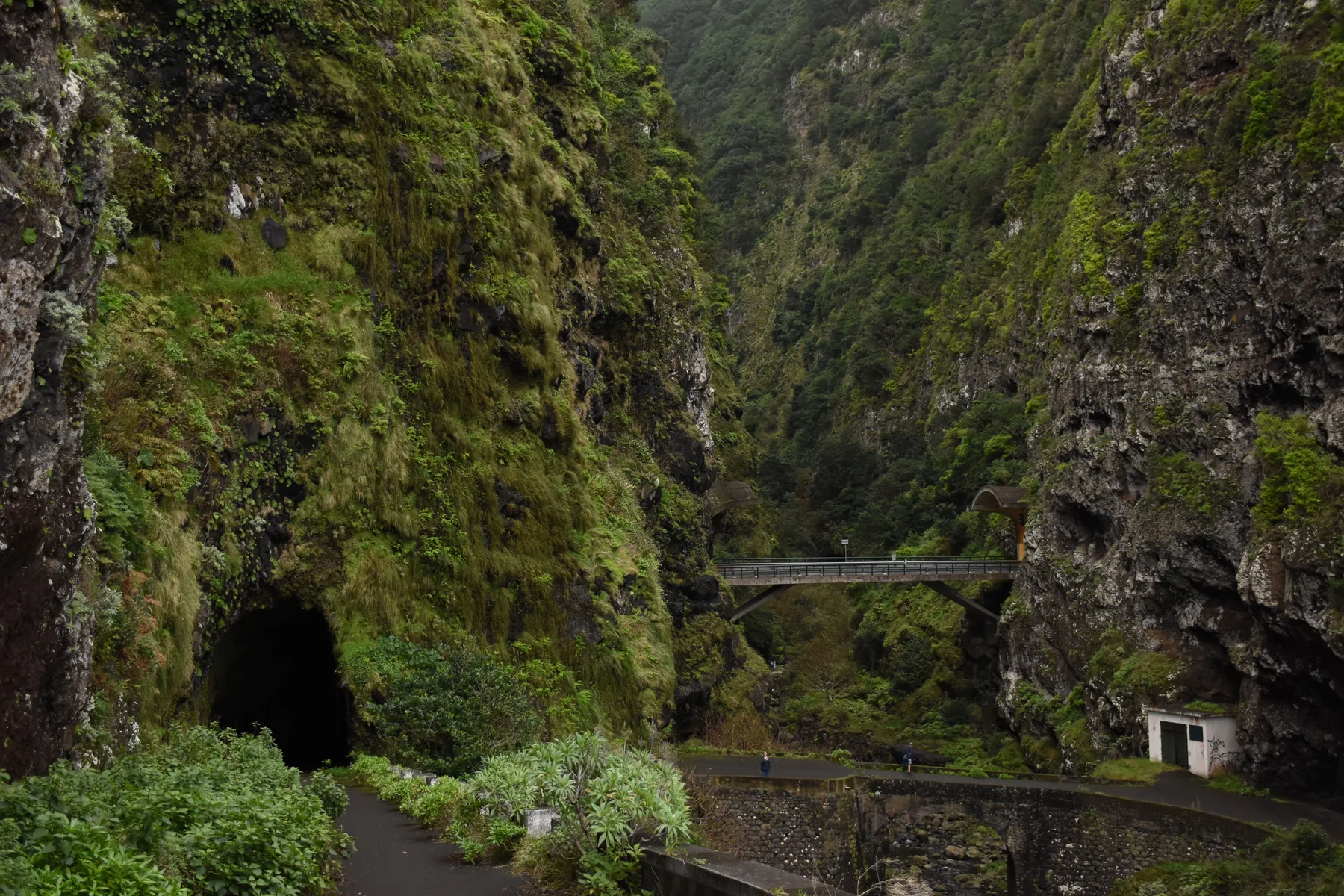
The VR1 is the island's main highway, and its section between Ribeira Brava and Machico Sul is run under a regional operation and maintenance contract. The previous operator's concession ended on 28 July 2026, a new operator took over under the VR1 name, and the 24-hour assistance line is 800 290 290. The via expresso roads, VE1 to VE4, have an 80 km/h limit outside towns and run about half their length in tunnels; the VE2 links São Vicente and Porto Moniz on the north coast over 14.05 km, an alternative to the old coast road. Signs at a tunnel entrance can change the speed limit inside it.
Off those roads, the regional ER roads are numbered and many are winding, narrow and steep; the ER101 is the coastal ring road. Rain makes the mountain roads harder going, so check the forecast before a day on them, and bad weather closes some altogether, the road up to Pico do Arieiro among them: on 3 March 2026 the regional government shut the access roads to Poiso and the summit for snow, and the closed road was the ER202 between Poiso and the summit.
The rental cars at Madeira Airport join the expressway network straight away and reach Funchal in about 19 minutes, Ribeira Brava in 36 and Calheta in 49. The drive from Funchal to Porto Moniz at the north-west tip takes about 57 minutes out and 58 back, and from the airport it is about 70. Santana on the north coast is about 25 minutes from the airport, and the road to Pico do Arieiro, 22.8 km, takes about 31. These are approximate times by the fastest road, without traffic.
| Destination | Km | Drive |
|---|---|---|
| Funchal (centre) | 19 | 19 min |
| Câmara de Lobos | 25.9 | 25 min |
| Santana | 22.4 | 25 min |
| Pico do Arieiro | 22.8 | 31 min |
| Ribeira Brava | 37 | 36 min |
| Ponta do Sol | 40.9 | 41 min |
| Calheta | 49.9 | 49 min |
| São Vicente | 50.2 | 51 min |
| Seixal | 57.8 | 1 h 1 min |
| Porto Moniz | 65.9 | 1 h 10 min |
Your dates, your pick-up point on the island, and each car's deposit, card rule and mileage shown before you pay.
Search cars for your datesThe car may be driven on paved public roads anywhere on the island. The rental conditions rule out the ferry between the islands and the mainland in either direction; for Porto Santo, ask before you book. Fines, fuel and parking are the renter's to pay, and the car goes back with the fuel it had at the start. Madeira adds a regional fee to every rental car, paid to the rental company at pick-up, separately from the price paid online: 2 euros for each full rental day, up to 10 days and 20 euros per contract, and 1 euro a day, up to 10 euros, for a zero-emission car.
Portuguese law requires the driver to carry an identity document, the driving licence and the insurance certificate, along with the car's own registration and identification documents and, where one is required, its inspection record. A UK photocard licence is valid in Portugal on its own; a paper licence may need updating or a permit.
Children under 12 who are shorter than 135 cm travel in an approved child restraint suited to their size, in the back; a child under 3 in a rear-facing seat may ride in front only with the front airbag off. Child seats are extras on most rental cars.
Fuel stations are thickest in the east of the island, so fill up before a day on the west coast. Many are open around the clock and some close at 10 or 11 pm, and they take cards and cash. At the pump, petrol is gasolina and diesel is gasóleo, with the EU marks: E in a circle for petrol, B in a square for diesel.
Parking follows the colour of the lines: blue is paid, yellow means no parking, and white is free except in bays marked M, which are kept for residents. Funchal's meters run from 08:00 to 20:00 on weekdays and 08:00 to 14:00 on Saturdays and are free on Sundays and public holidays. Most spaces in the centre of Funchal are paid, so before a car is delivered in Funchal, ask the hotel whether it has parking of its own.
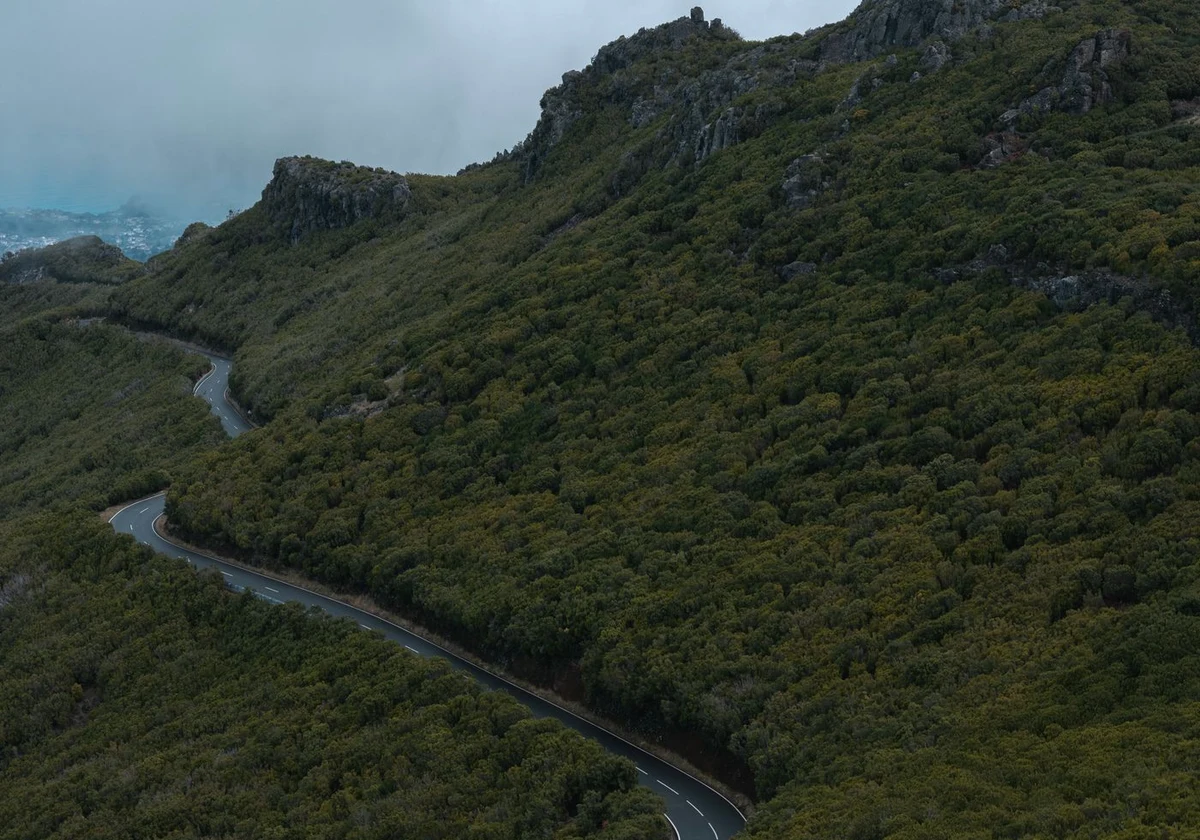
On Madeira's steep mountain roads, let the gears do the work on the way down: use lower gears on descents rather than relying only on the brakes. Portugal's road code requires drivers to slow down especially on steep descents, on bends and other places with poor visibility, in tunnels and on wet or slippery stretches.
Overtaking is banned on crests, on bends with poor visibility, wherever visibility is insufficient and wherever the road is too narrow. Outside built-up areas, a brief sound of the horn is allowed on bends, junctions and crests with poor visibility.
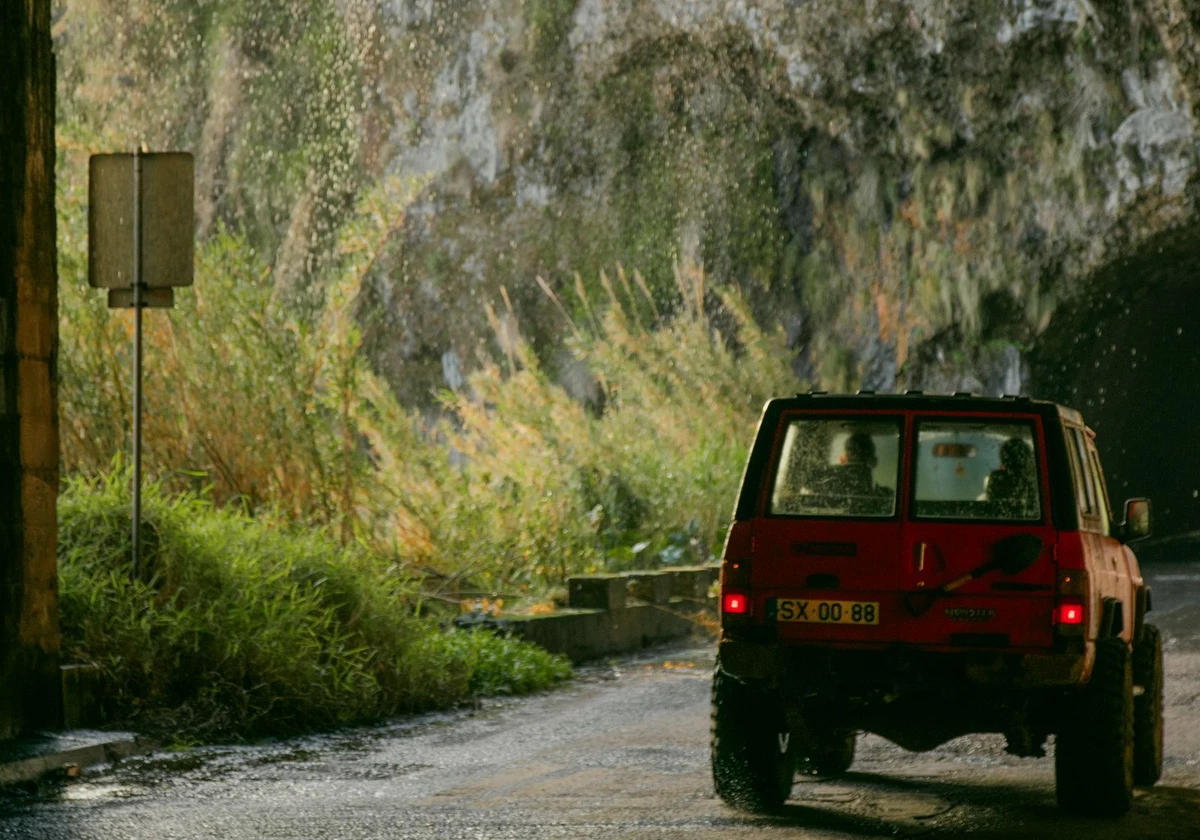
Madeira has more than 100 road tunnels, and they make travelling around the island easier. The VR1's Ribeira Brava tunnel is about 1.8 km long. In tunnels signed as such, dipped headlights are compulsory by day, and the law requires drivers to slow down in tunnels.
From dusk to dawn the lights go on: dipped beam when meeting other road users or within 100 m of the vehicle ahead, and main beam otherwise. The same applies by day in fog, heavy rain or snow, and fog is common in the mountains even when the coast is sunny.
Before dawn on 4 April 2025, traffic filled the road up to Pico do Arieiro, with cars parked on verges and bends; parking on the carriageway outside towns is banned, and at night the fine is 250 to 1,250 euros. After a late landing, check the car's handover hours against the flight: they are set per car, and some cars charge for a handover outside them. For anyone who would rather not drive at night, there is a taxi rank on the ground floor of Arrivals.
Madeira's roads do close in bad weather and after rockfalls, and the live source for closures is the free ProCiv Madeira app of the regional civil protection service, which sends real-time information on closed roads and fires in English, Portuguese, French and German.
What people ask before they drive on Madeira.
The expressways are flat and wide; the regional roads wind, climb and narrow, and some are very steep. An automatic makes the frequent gear changes easier on the winding roads, and a small car is the easier one on narrow roads.
No. The expressways and main roads are free to drive.
A UK photocard licence is enough. The rental conditions strongly recommend a permit if your licence is valid only in the country that issued it.
Yes. Most cars have unlimited mileage, and the drive from Funchal to Porto Moniz takes about 57 minutes out and 58 back. Where a car carries a daily cap, its page states it.